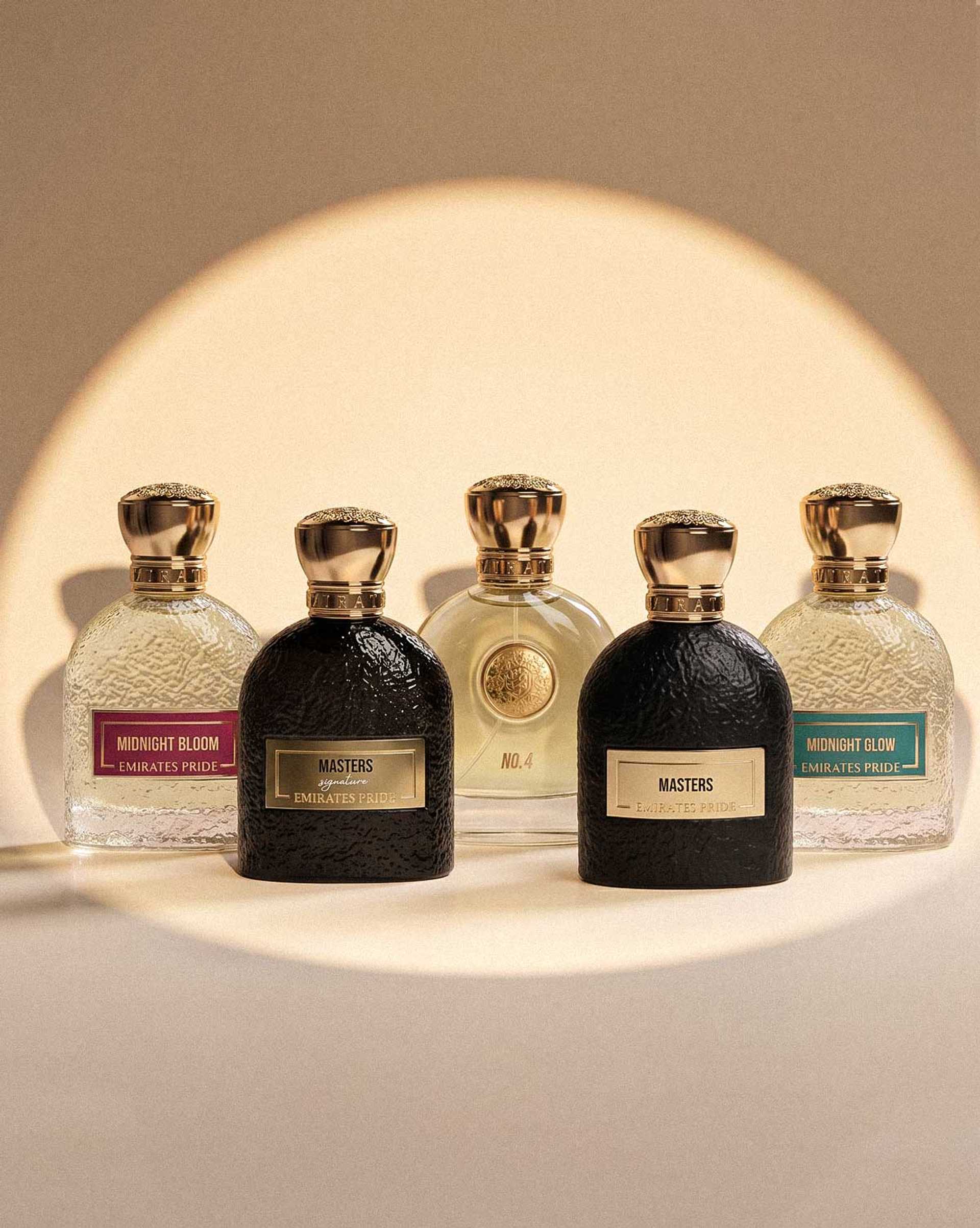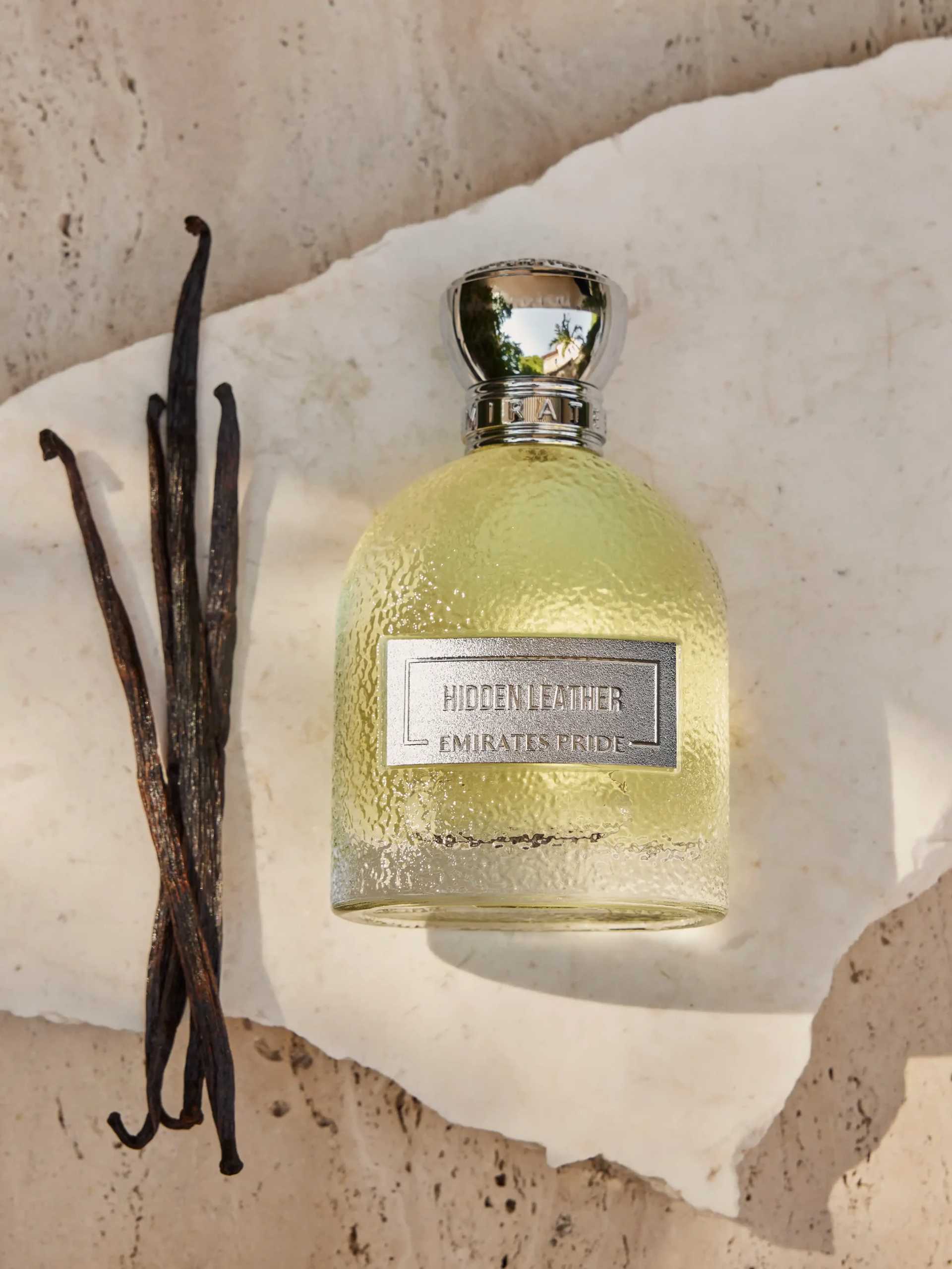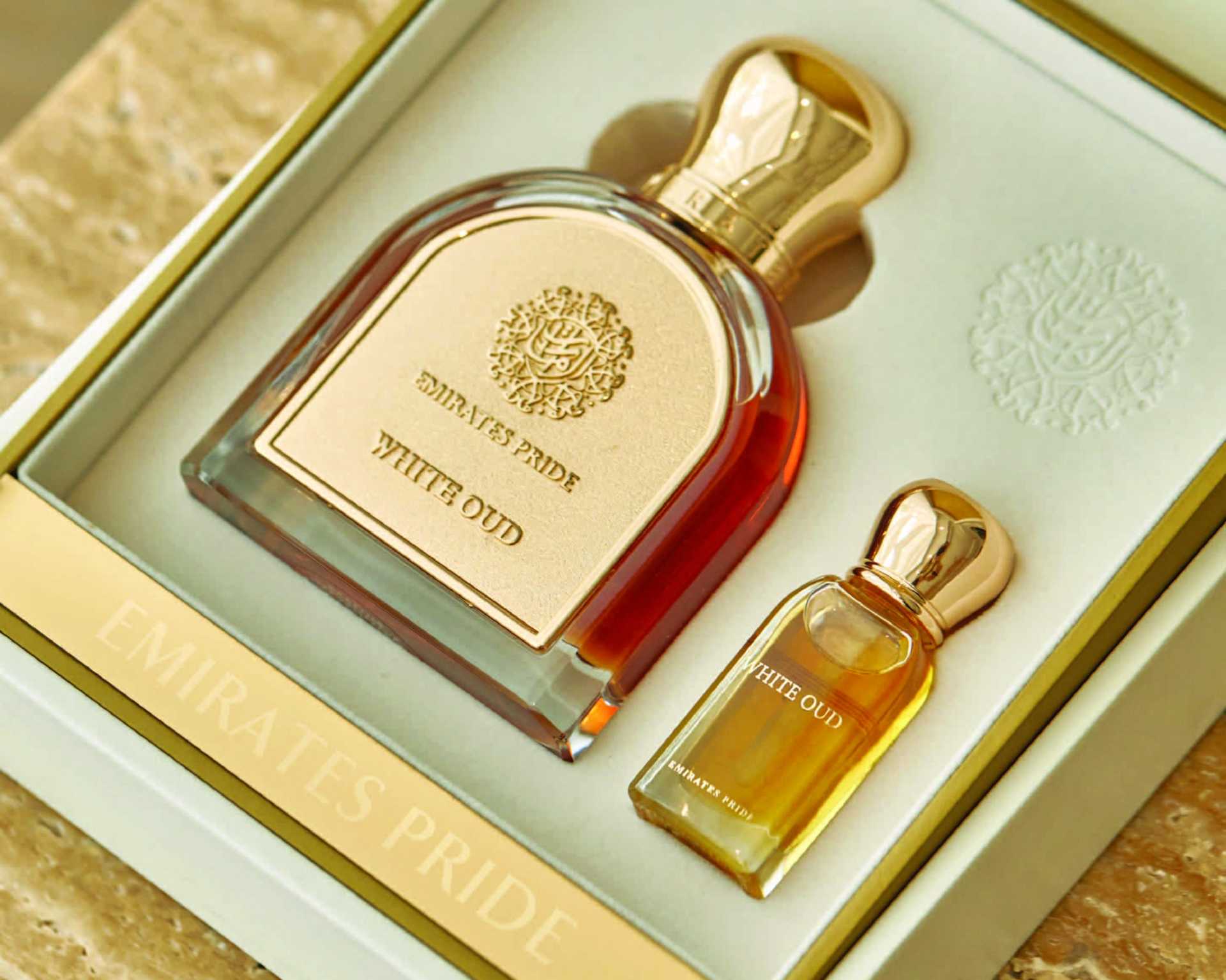
There is a moment every guest in an Emirati home remembers: the mabkhara passed from hand to hand, ribbons of fragrant smoke curling upward, the whole majlis wrapped in oud and amber. If you have ever wondered how to use bakhoor at home properly, generously, the way it has been done in the Gulf for generations this guide walks you through the ritual step by step, from choosing a burner to layering the smoke with your personal fragrance.
At Emirates Pride, bakhoor is not a trend to us; it is where we come from. Our perfumes are made in the UAE and built on the same pillars oud, amber, musk that have scented Arabian homes for centuries. Explore that lineage in our Heritage collection.
What Exactly Is Bakhoor?
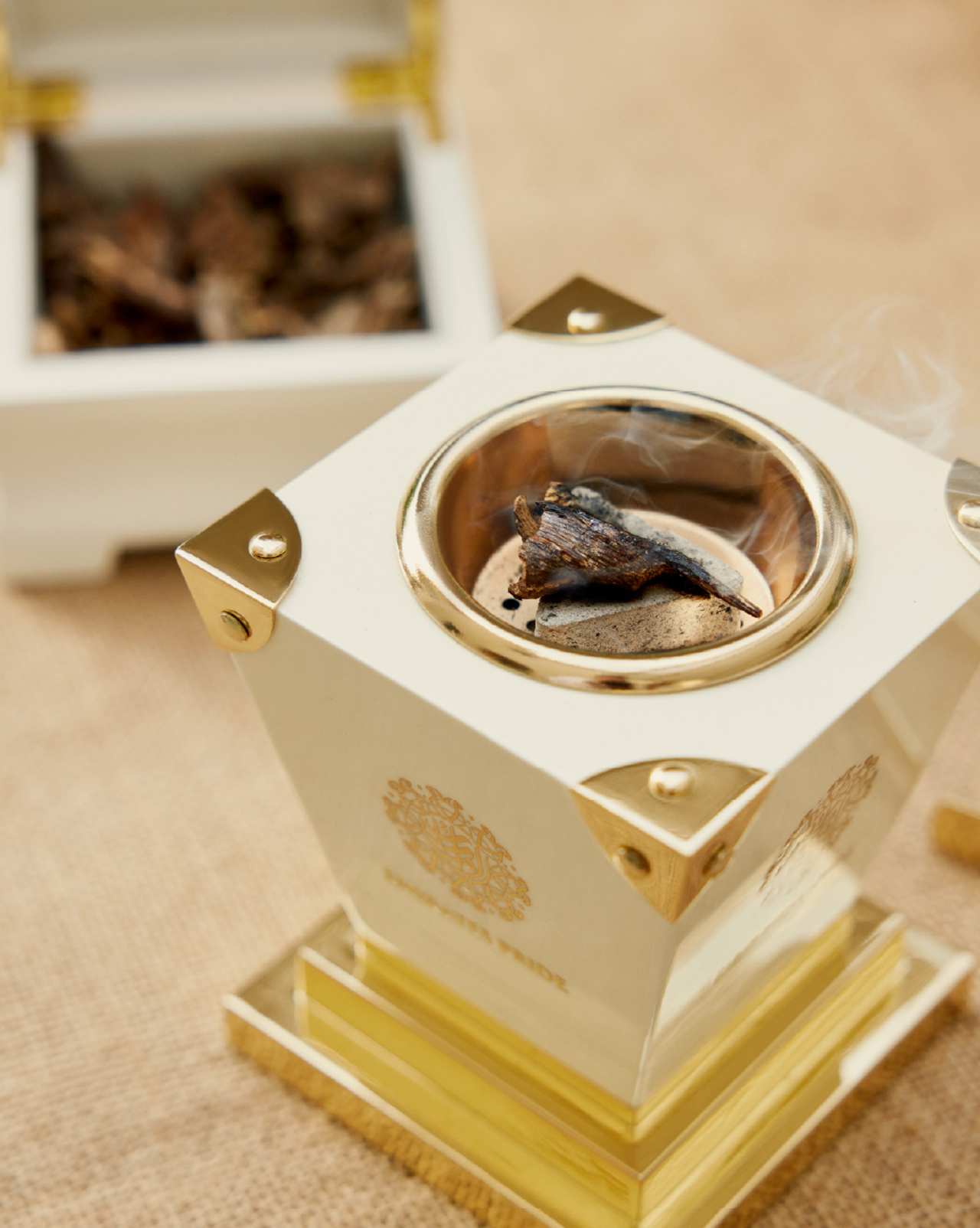
Bakhoor (sometimes written bukhoor, or dakhoon in the Emirati dialect) refers to wood chips traditionally agarwood soaked in fragrant oils and blended with resins, amber, musk, and florals.
When placed over a hot coal or an electric burner, the chips release a slow, dense, luxurious smoke that perfumes the air, the curtains, the carpets, and your clothes far longer than any candle or room spray can.
It differs from pure oud chips, which are unprocessed agarwood burned for their natural aroma alone. Bakhoor is the composed, perfumed expression closer to a finished fragrance than a raw material.
Why Bakhoor Still Matters in the Modern Home
In the UAE and across the GCC, bakhoor is the language of hospitality. Burning it before guests arrive signals welcome; passing the burner around the majlis is a gesture of honour. But beyond tradition, there are practical reasons the ritual is winning new devotees worldwide:
- Longevity – A single session can scent a room for hours, and fabrics for days.
- Atmosphere – Grounding, resinous notes such as oud and amber are prized for the calm, settled mood they create at the end of a long day.
- Scenting clothes – Holding garments briefly over the smoke the classic Gulf technique leaves them perfumed in a way no spray can replicate.
How to Use Bakhoor at Home: Step by Step
The traditional charcoal method
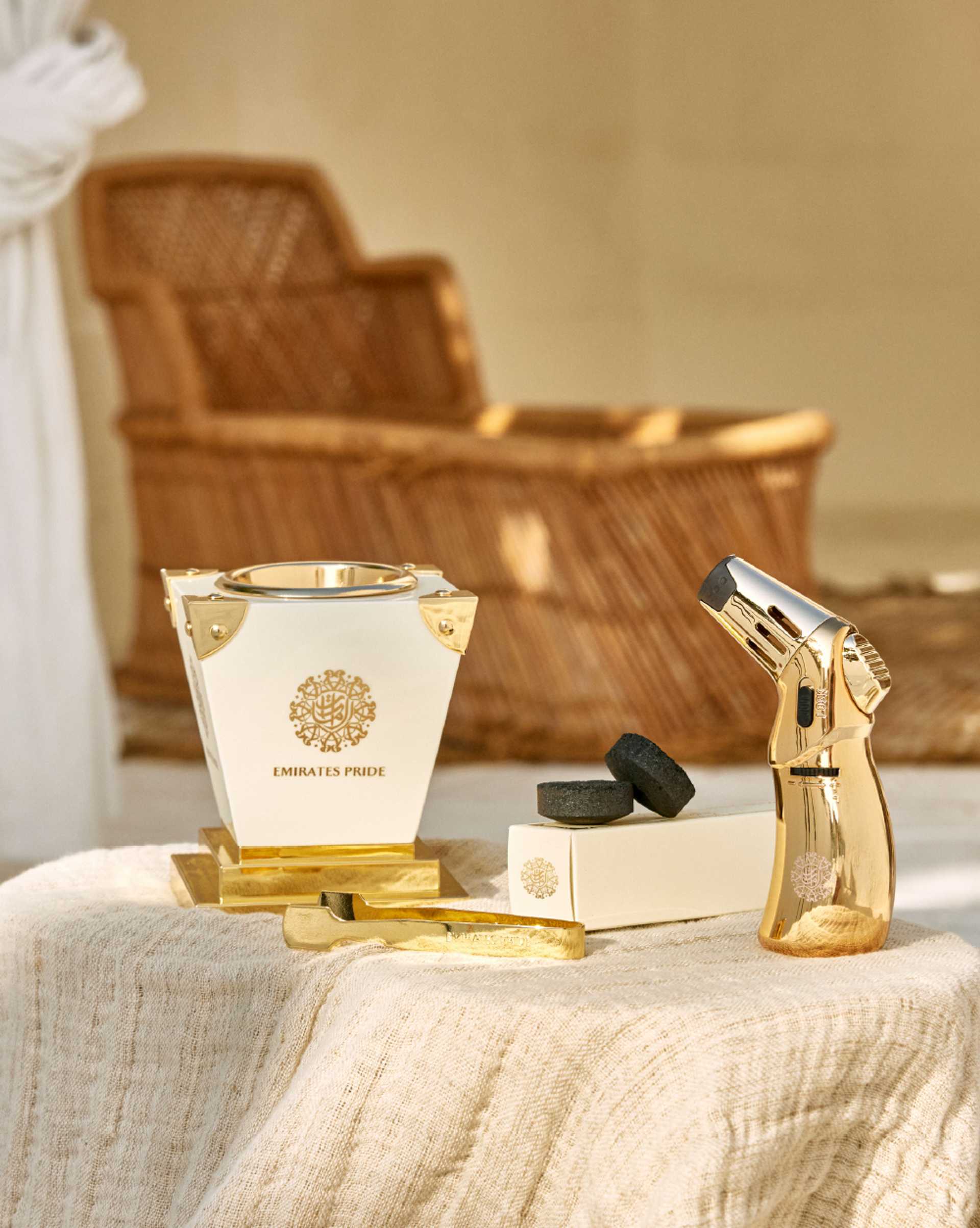
1. Light a charcoal disc with tongs and let it heat until it glows and forms a fine grey ash usually three to five minutes.
2. Place the coal in your mabkhara (bakhoor burner). Stone, ceramic, or metal-lined burners handle the heat best.
3. Add a small piece of bakhoor on top of the coal — a pinch is enough. More can always be added; too much at once turns rich smoke acrid.
4. Let the smoke build for a few minutes, then carry the burner carefully from room to room, or leave it in the majlis or entryway where guests arrive.
5. To scent clothing, hold each garment about thirty centimetres above the smoke for ten to twenty seconds sleeves and collars first.
The easy electric method
An electric mabkhara removes the charcoal entirely: switch it on, add the bakhoor to the plate, and adjust the temperature. It is cleaner, safer around children, and ideal for daily use save the charcoal ritual for Fridays, Eid mornings, and special gatherings.
A note on safety
Always burn bakhoor in a ventilated room, keep the burner on a heat-proof surface away from fabrics, and never leave a live coal unattended. A little airflow also helps the scent travel evenly instead of pooling in one corner.
When to Burn Bakhoor: The Rhythm of the Ritual
There is no wrong time, but tradition suggests a rhythm: after cleaning the house, so the scent settles into fresh fabrics; before guests arrive, so the welcome is in the air at the door; on Friday mornings, ahead of family gatherings; and during weddings, Eid, and Ramadan evenings, when the most precious blends are brought out. Many Emirati households also pass the mabkhara at the end of a gathering — a graceful, fragrant way of saying the evening is complete.
Layering Bakhoor with Your Personal Fragrance
Here is the secret the fragrance world is only now catching up to: in the Gulf, bakhoor has always been the first layer of a scent wardrobe, not a separate one. The smoke perfumes your clothes; your perfume completes the composition on skin. The pairing rules are simple:
- Match the register. A smoky, woody bakhoor calls for a fragrance with the same backbone. Firewood our crackling, ember-warm oud mirrors the burner beautifully and deepens as the evening goes on.
- Go deeper on oud. If your bakhoor is oud-forward, amplify it. More Of Oud does exactly what its name promises a rich, unapologetic oud that turns the whisper of smoke on your kandura or abaya into a full statement.
- Or contrast with freshness. For daytime, let the bakhoor carry the warmth and wear something crisp on skin. Caballo Navy brings a clean, confident freshness that plays against resinous smoke the way sea air plays against a warm evening. If you are building a scent wardrobe from scratch, browse the full Emirates Pride perfume collection every bottle is composed to sit naturally alongside the bakhoor tradition it grew out of.
Choosing Quality Bakhoor (and Avoiding the Rest)
Quality shows in three places. The scent should be layered opening smoke, a heart of oud or florals, a resinous trail rather than a flat, synthetic sweetness. The chips should feel dense and slightly oily, not dry and crumbly. And the smoke should be generous but smooth; harsh, throat catching smoke usually means cheap oils. As with perfume, provenance matters: blends made in the Gulf, by houses raised on the tradition, tend to respect it.
The Takeaway
Learning how to use bakhoor at home is less about technique than about rhythm coal, chip, smoke, welcome. Start with an electric burner and a mild oud blend, find the moments in your week that deserve marking, and let the ritual grow from there. And when the smoke settles into your clothes, finish the story with a fragrance worthy of it.
Frequently Asked Questions
What is the difference between bakhoor and oud?
Oud is raw agarwood, burned for its natural aroma. Bakhoor is a composed product wood chips soaked in perfume oils and blended with resins, musk, and amber. Think of oud as the ingredient and bakhoor as the finished recipe.
How long does bakhoor scent last in a room?
An average session scents a room for several hours, and soft furnishings curtains, cushions, carpets can hold the fragrance for days. On clothes, a brief pass over the smoke typically lasts through a full day of wear.
Can I use bakhoor without charcoal?
Yes. An electric mabkhara heats the bakhoor on a temperature-controlled plate with no coal, no flame, and far less effort the preferred method for daily use in many modern UAE homes.
Is it safe to burn bakhoor indoors?
Yes, with sensible precautions: ventilate the room, use a heat-proof burner on a stable surface, keep it away from fabrics and out of children’s reach, and never leave burning charcoal unattended.
Which perfumes pair best with bakhoor?
Woody and oud-forward fragrances are the natural partners smoky blends like Firewood or rich ouds like More Of Oud extend the bakhoor’s trail, while a fresh scent like Caballo Navy offers an elegant daytime contrast. See the full collection for more pairings
Bakhoor and Dakhoon in Emirati Homes
In homes across Dubai, Abu Dhabi and Al Ain, burning dakhoon before guests arrive remains one of the warmest gestures of Emirati hospitality, and a mabkhara by the door is as much a part of the majlis as Arabic coffee.
Shop oud and dakhoon and dakhoon selection from Emirates Pride in the UAE, delivered across the country in 2–3 business days and complimentary over AED 550, or experience them at our boutiques from Dubai to Al Ain; find one on our store locator.